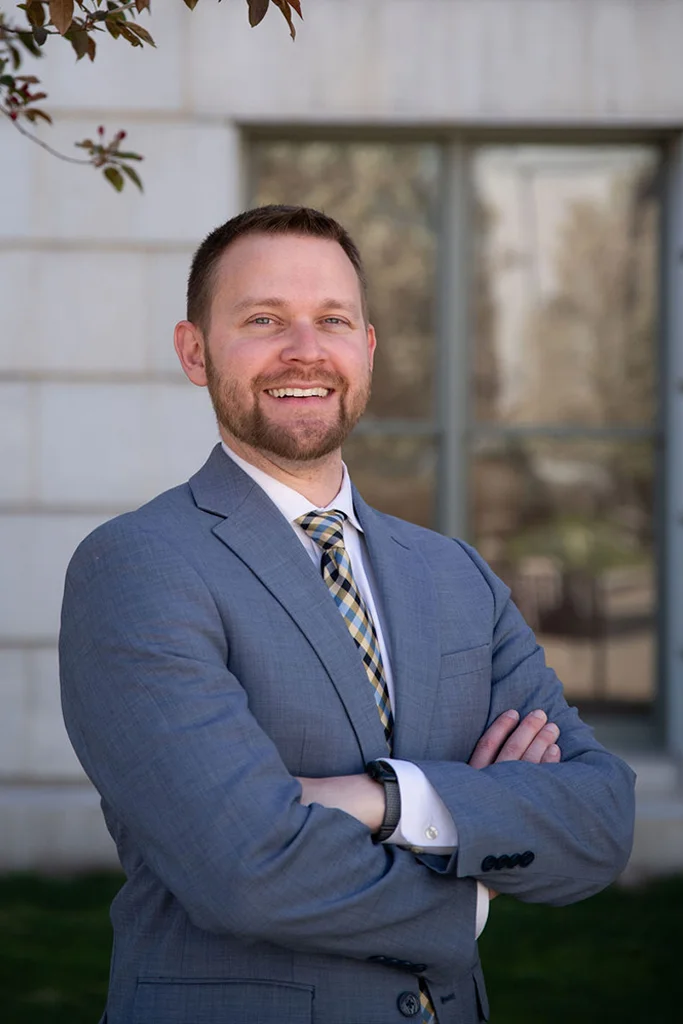
Boulder County Sex Crimes Lawyer
Sex crime charges in Boulder County carry consequences that extend far beyond the courtroom. A conviction can mean prison time, mandatory registration as a sex offender, restrictions on where you can live and work, and permanent damage to your reputation in a community where these cases receive sustained public attention. At DeChant Law, Boulder County sex crimes lawyer Reid DeChant approaches these cases with the seriousness they require and the kind of individualized attention that a charge this significant demands.
What Boulder County Prosecutors Are Actually Working With
Boulder County’s District Attorney’s office prosecutes sex crime allegations with significant resources and institutional momentum. Once a complaint is filed, the case rarely stops moving. Law enforcement in Boulder, Lafayette, Longmont, and Louisville routinely refers sexual assault and unlawful sexual contact cases to the DA’s office, and charges can be filed even when physical evidence is limited or the allegations are disputed from the start.
Many of these cases hinge almost entirely on the credibility of a complaining witness. That does not make the prosecution’s path easier to navigate, but it does mean the defense strategy must be built around a careful, detailed examination of how the accusation developed, who was interviewed, and what inconsistencies exist in the recorded accounts. The University of Colorado Boulder campus generates a meaningful number of Title IX investigations that run parallel to criminal proceedings, and understanding how those two systems interact matters when advising a client about decisions made during the criminal process.
Colorado sex crime charges range widely in severity. Sexual assault under CRS 18-3-402 is a class 4 felony at its baseline, but aggravating factors, such as use of force, victim age, or a position of trust relationship, can elevate it to a class 2 felony with an indeterminate sentence that carries no guaranteed release date. Unlawful sexual contact, sexual exploitation of a child, internet luring of a child, and failure to register as a sex offender each carry distinct statutory elements and penalties that require analysis on their own terms.
The Sex Offender Registration Requirement Is Often the Most Lasting Consequence
For most people charged with a sex crime in Colorado, registration on the sex offender registry is the consequence that follows them longest. Unlike a prison sentence with a defined endpoint, registration under CRS 16-22-108 can last a decade, twenty-five years, or an entire lifetime depending on the offense and risk classification assigned by the court.
Registration imposes real, ongoing obligations. Registered individuals must report to law enforcement regularly, notify authorities of address changes, and comply with residency restrictions that can make it difficult to find housing near schools, parks, or daycare facilities. In Boulder County, where rental housing is already constrained and community density is high, those restrictions often translate into genuinely limited options for where a person can live after release.
Colorado does have a process for deregistration, but the threshold is high and the waiting period is substantial. Eligibility depends on the offense tier, compliance history, and a court determination that the individual no longer poses a public safety risk. Understanding how registration requirements interact with a potential plea offer, a diversion program, or a trial outcome is central to making informed decisions early in a case.
How Evidence Gets Built and Challenged in These Cases
Sexual assault investigations in Boulder County typically involve a forensic medical examination, interviews conducted by specially trained forensic interviewers, digital evidence review, and statements taken from both parties. The standard timeline moves quickly after a complaint is made, which means critical evidence, including text messages, location data, and recorded communications, is gathered before a defendant has had any opportunity to consult with an attorney.
Physical evidence from a sexual assault nurse examiner (SANE) examination is often presented as authoritative, but the results require careful scrutiny. The presence of physical findings does not, by itself, establish non-consent, and the absence of findings does not disprove assault. Expert interpretation matters, and so does understanding what the forensic examiner’s report actually says versus what a prosecutor is arguing it means.
Digital evidence has become central to these prosecutions. Text messages, social media exchanges, and app-based communications can both support and undermine the prosecution’s account, depending on their content and how they are contextualized. Defense review of digital evidence often produces a more complete picture of a relationship or interaction than what the initial complaint reflects. That work requires time, attention, and a working knowledge of how digital forensic evidence is collected and authenticated.
Reid’s background includes handling serious felonies as a public defender in Denver, Adams County, and Broomfield, including sexual assault cases where the defense depended on methodical investigation and the ability to challenge a narrative that had already been accepted as fact by law enforcement. That kind of experience matters when the evidence looks one-sided at the outset.
Questions Worth Answering Before You Talk to Anyone Else
Can I be charged based on an accusation alone, with no physical evidence?
Yes. Colorado prosecutors file sex crime charges regularly in cases where the only direct evidence is the complaining witness’s account. Physical evidence strengthens a case, but its absence does not prevent prosecution. This is why early legal representation is critical before any statement is given to police.
What happens if someone contacts me directly after an accusation is made?
Any contact with an alleged victim, directly or through third parties, can be used against you and may result in additional charges such as witness tampering or violation of a protection order. If law enforcement or prosecutors contact you, you have the right to decline to speak without an attorney present.
What is the difference between a deferred judgment and a conviction in a sex case?
A deferred judgment allows a defendant to complete a period of supervision and programming before a formal conviction is entered. If the defendant completes the requirements, the case can be dismissed. However, in sex cases in Colorado, a deferred judgment may still require sex offender registration depending on the charge, and those obligations apply during the deferral period. The terms vary significantly by case and should be evaluated carefully before accepting any offer.
If charges are eventually dismissed, will this appear on background checks?
An arrest or charge can appear on background checks even after dismissal. Colorado’s record sealing laws allow some individuals to petition to seal arrest and case records after dismissal, but eligibility depends on the specific charges and circumstances. Sex offense convictions generally cannot be sealed, which is another reason why the outcome of the case matters so significantly.
Will I lose my professional license if I’m convicted of a sex crime?
Many Colorado licensing boards, including those governing teachers, healthcare workers, and attorneys, treat sex crime convictions as grounds for license suspension or revocation. The proceeding before a licensing board is separate from the criminal case but is directly affected by its outcome. If you hold a professional license, that consideration should be part of every strategic conversation in your defense.
How does a parallel Title IX investigation affect my criminal case?
If the alleged conduct occurred in an educational setting, a Title IX investigation by the institution may run alongside the criminal case. These are separate proceedings with different standards of proof, different procedural rules, and different potential consequences. Statements made in one proceeding can sometimes be used in the other, which is why coordinated advice across both processes matters.
What should I do if law enforcement wants to talk with me before charges are filed?
You have the right to remain silent and to have an attorney present before speaking to investigators. Pre-charge interviews are a critical moment where well-intentioned statements frequently complicate the defense later. The time to get legal representation is before that conversation happens, not after.
Reid DeChant Handles These Cases in Boulder County and Across the Front Range
DeChant Law represents individuals facing sex crime charges throughout Boulder County, including cases handled in the Boulder County Justice Center. Reid also works with clients in Adams County, Jefferson County, and other Front Range communities where he built his practice as a public defender and in private defense work. He brings to these cases a philosophy grounded in listening to the person behind the charge, understanding the complete story, and building a defense that reflects that story in court. If you are facing sex crime allegations in Boulder County, DeChant Law is prepared to work through the facts of your case and advise you on what the realistic path forward looks like for a Boulder County sex crimes attorney who will take your case seriously from the first conversation.