Berthoud DUI Defense Lawyer
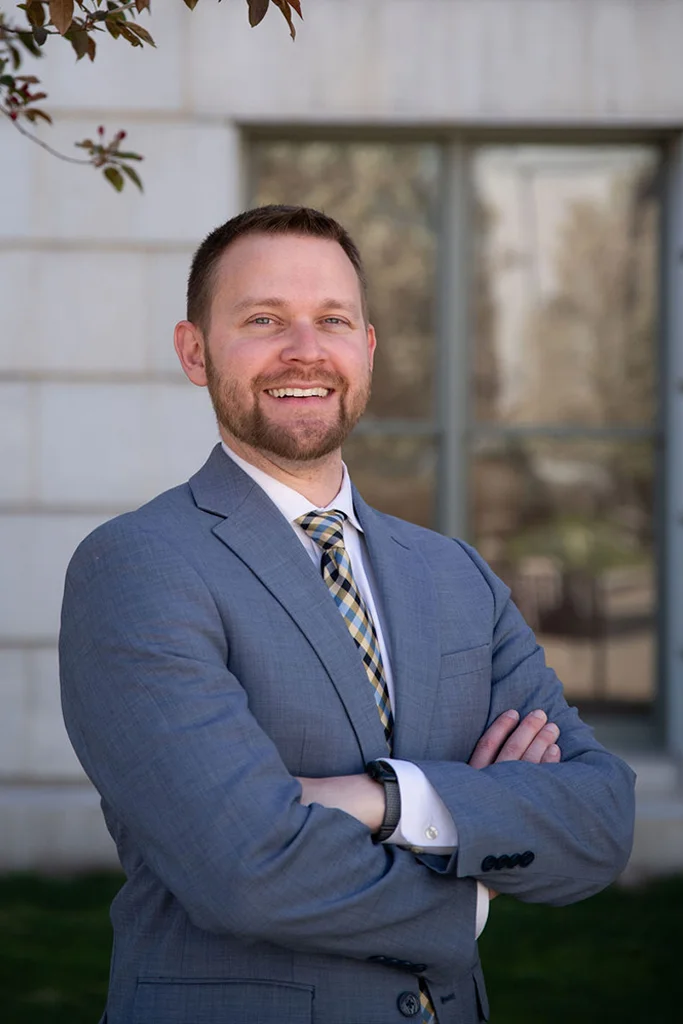
A DUI stop on US-287 or Highway 56 near Berthoud can unravel quickly. What starts as a traffic stop becomes a field sobriety test, then an arrest, then a court summons, and suddenly you are looking at license suspension, fines, and a criminal record that follows you into every job application and background check. Reid DeChant is a Berthoud DUI defense lawyer who has handled these cases from both sides of the courtroom, first as a public defender and then in private practice, and he understands that a DUI charge is rarely a simple matter of what a breathalyzer said.
What Larimer County Prosecutors Actually Focus On in DUI Cases
Berthoud sits in Larimer County, and cases arising from DUI arrests in the area are handled through the Larimer County courts in Fort Collins. That matters because prosecution strategies, plea offer tendencies, and how aggressively a case gets filed all vary by county. Larimer County prosecutors are not uniformly lenient, and a case that might resolve quickly in one jurisdiction can move toward trial in another.
What they are working with is usually some combination of officer observations during the traffic stop, field sobriety test results, and a chemical test, either a breath test at the scene or a blood draw. Each of those pieces of evidence has vulnerabilities. The officer’s observations are subjective and influenced by training and bias. Field sobriety tests were designed under controlled conditions and are performed roadside in weather, traffic, and anxiety that skew the results. Chemical tests require proper administration, calibrated equipment, and a valid chain of custody for blood samples. When any part of that chain breaks down, the evidentiary foundation of the charge weakens with it.
Colorado also operates under express consent law, which means anyone driving on Colorado roads has already consented to a chemical test if a law enforcement officer has probable cause to believe they are impaired. Refusing that test triggers automatic consequences at the DMV level, entirely separate from the criminal case. Managing both tracks simultaneously is one of the practical challenges most people do not anticipate when they are first arrested.
The DMV Hearing Is a Separate Fight You Cannot Ignore
After a DUI arrest in Colorado, the clock on your driver’s license starts immediately. You have seven days from the date of arrest to request a hearing with the Colorado DMV, or your license revocation becomes automatic. That hearing is administrative, not criminal, and the outcome does not depend on whether you are convicted in court. A case can be dismissed and you can still lose your license if the DMV hearing was not properly contested.
Reid has secured dismissals in DMV express consent hearings on grounds ranging from improper advisement procedures to failure to administer a chemical test within the required two-hour window. These are technical defenses that require knowing exactly what the regulations demand of law enforcement and how to hold them accountable when those requirements are not met. Many drivers, and some attorneys who do not focus on DUI work, do not realize how much room exists to challenge license revocation at this stage.
For Berthoud residents who commute to Loveland, Fort Collins, or even the Denver metro via I-25, losing a license is not a minor inconvenience. It affects employment, family logistics, and daily life in ways that compound over the months a suspension lasts. Contesting the DMV action vigorously, separate from the criminal defense, is not optional, it is foundational.
How Berthoud’s Geography and Local Enforcement Shape DUI Cases
Berthoud occupies a stretch of northern Colorado where agricultural roads meet highway corridors. US-287 runs through town and connects to Loveland to the north and Longmont to the south, and it is a common patrol route. Highway 56 connecting east toward I-25 sees similar enforcement, particularly after events at venues in the area. Colorado State Patrol also runs periodic saturation patrols on the I-25 corridor, which affects drivers coming into or through the region.
Understanding where stops tend to occur and how local departments conduct their DUI investigations matters when building a defense. An officer trained primarily in roadside observations may make different documentation errors than one operating in a more urban setting with more support resources. The specifics of how a Berthoud or Larimer County stop was conducted, what the officer noted, what equipment was used, and what advisements were given all feed into how a defense is constructed.
Drug-impaired driving cases also come through these corridors. Colorado’s legalization of marijuana has not simplified DUI-D enforcement, and there is no per se blood-THC limit that clearly maps onto impairment the way a 0.08 BAC does for alcohol. Cases involving cannabis, prescription medications, or other substances often require expert challenges to the state’s impairment theory, and they demand a lawyer who has handled DUI-Drug cases specifically, not just alcohol-related DUI.
Questions Berthoud Residents Ask About DUI Charges
What is the difference between DUI and DWAI in Colorado?
DUI requires a BAC of 0.08% or higher, or impairment to a substantial degree. DWAI, driving while ability impaired, applies at a BAC between 0.05% and 0.079%, or when driving ability is impaired to the slightest degree. DWAI carries its own penalties, including fines and potential jail time, and should not be treated as a minor charge just because it sounds lesser. Both go on your record and both affect your license.
If I refused the breath test, is my case already lost?
No. Refusing a chemical test triggers an automatic DMV process, but it does not automatically result in a criminal conviction. Prosecutors may use the refusal as evidence of consciousness of guilt, but that argument is not unassailable. Refusal cases can be and are won, and the absence of a chemical test result removes one key piece of evidence from the state’s case.
Can a first DUI in Colorado result in jail time?
Yes. A first-offense DUI carries a range of five days to one year in jail, though many first-time offenders avoid active incarceration. The sentence depends on factors including BAC level, driving behavior, whether anyone was injured, and prior record. This is not a charge where the worst outcome is a fine and a slap on the wrist.
How does a DUI conviction affect a professional license or CDL?
Commercial drivers face unique consequences because federal regulations impose stricter BAC standards, and a DUI conviction can disqualify a CDL holder from operating commercial vehicles. Professionals holding medical, nursing, or pilot licenses may also face separate disciplinary proceedings with their licensing board. Reid has handled DUI cases specifically for clients in these categories and understands that the courtroom outcome is only part of what needs to be managed.
What happens if this is not my first DUI?
Second and third DUI offenses in Colorado carry mandatory minimum jail sentences, longer license revocations, and higher fines. A third offense is still a misdemeanor in most circumstances, but a fourth offense can be charged as a class 4 felony. The trajectory matters, and handling a second or third charge with the same approach as a first offense is a mistake.
Can my DUI charge be dismissed or reduced?
Yes, and it happens with some regularity when the defense identifies real weaknesses in the state’s case. Reid has obtained case dismissals and not-guilty verdicts at trial in DUI cases across multiple Colorado counties. Whether reduction or dismissal is realistic depends entirely on the specific evidence, the jurisdiction, and how the defense is built.
Do I need a lawyer if I am planning to plead guilty?
Yes, because what you plead to and the terms of any agreement matter enormously. A guilty plea entered without review of the evidence may accept a worse outcome than was necessary. Even if you ultimately decide to accept a plea, having an attorney evaluate the case first ensures that decision is informed, not just expedient.
Talk to DeChant Law About Your Berthoud DUI Case
A DUI arrest in Berthoud does not resolve itself, and the way it resolves depends heavily on how it is handled from the beginning. Reid DeChant built his practice on the idea that clients deserve someone who actually cares about what happens to them, not just someone who processes cases. That comes from his years as a public defender, where he learned that clients arrive at their lowest moment and need a lawyer who will fight for the outcome that genuinely fits their situation. Whether you are dealing with a first offense, a drug-related impairment charge, or a case heading toward trial, contact DeChant Law to have a Berthoud DUI attorney review what the state actually has and what can be done about it.