Arvada Vehicular Assault and Vehicular Homicide Defense Lawyer
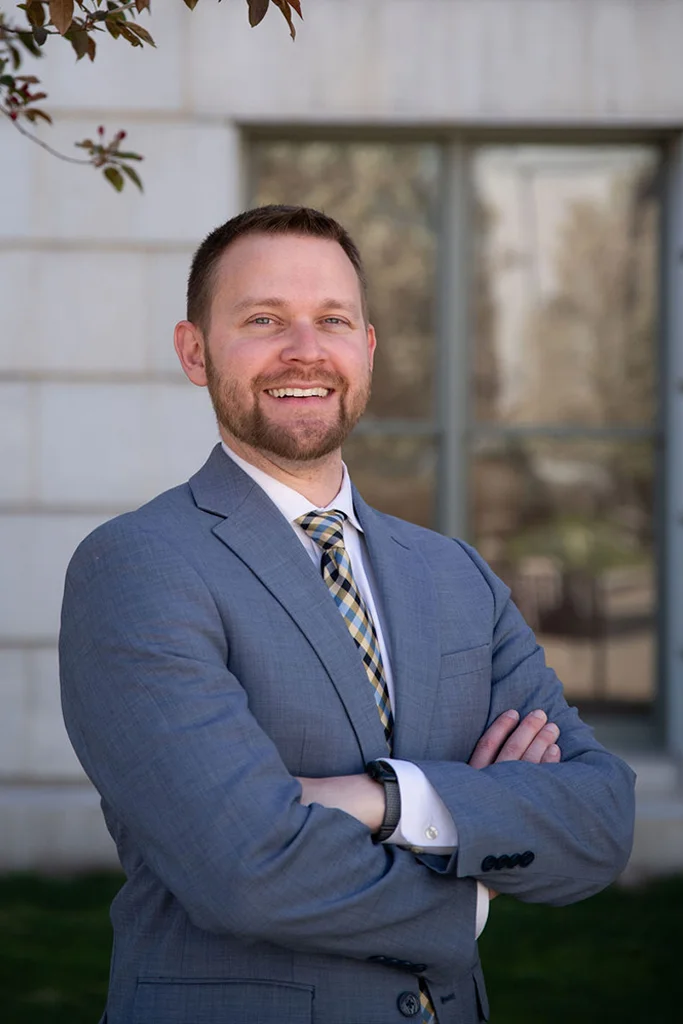
A crash that results in serious injury or death puts you in a completely different category of legal jeopardy than an ordinary traffic offense. Colorado prosecutors treat vehicular assault and vehicular homicide as some of the most aggressively charged crimes on the books, and the cases are built on a combination of accident reconstruction, toxicology, witness accounts, and law enforcement reports that may not tell the full story. At DeChant Law, attorney Reid represents people facing these charges in Arvada, Jefferson County, and the surrounding Denver metro area, with a focus on digging into the evidence and building a defense that actually holds up.
What Colorado Law Actually Says About These Charges
Vehicular assault and vehicular homicide are not the same as reckless driving or DUI, even though they often arise from similar circumstances. The distinction comes down to outcome and the degree of fault Colorado prosecutors can establish.
Vehicular assault under C.R.S. 18-3-205 covers situations where a driver causes serious bodily injury to another person through either reckless driving or driving under the influence. The reckless driving version is a class 5 felony. If the prosecution can establish that the driver was under the influence of alcohol or drugs at the time, it becomes a class 4 felony, which carries significantly longer prison sentences and steeper fines.
Vehicular homicide under C.R.S. 18-3-106 applies when a crash results in death. Again, there are two tracks. Reckless driving causing death is a class 4 felony. DUI-related vehicular homicide is a class 3 felony, one of the most serious non-violent felony classifications in Colorado. A class 3 felony conviction can mean four to twelve years in the Department of Corrections, with mandatory parole on top of that.
What matters practically is that prosecutors in Jefferson County do not need to prove that you intended to hurt anyone. They need to prove how you were driving and, in the DUI track, what your blood alcohol or drug level was. Those evidentiary questions are where a defense gets built or falls apart.
How Arvada Cases Get Built, and Where They Come Apart
Arvada sits at the intersection of several major roadways, including Wadsworth Boulevard, Kipling Street, and the Ward Road corridor near I-70. High-speed corridors and intersections with complicated traffic patterns generate serious accidents, and law enforcement in Jefferson County responds quickly. That speed of response matters because the evidence gathered in the first hours after a crash often forms the backbone of the prosecution’s case.
Accident reconstruction is usually central. A police reconstructionist will analyze skid marks, point of impact, vehicle damage, road conditions, and final resting positions to estimate speed and fault. These analyses carry real weight in court, but they also rest on assumptions and methodologies that can be challenged. If the reconstruction engineer made an error in measuring drag factors, misread the road surface, or failed to account for road debris, the speed and fault conclusions may be wrong.
Blood draws and breath tests are the other major piece. Colorado’s express consent law requires drivers suspected of impairment to submit to chemical testing, and the results can land at the center of a vehicular homicide or vehicular assault prosecution. But blood draws must be administered properly, stored correctly, and tested under valid procedures. Chain of custody issues, improper storage temperatures, and lab contamination are all grounds to challenge the reliability of a reported BAC. And for drug-related charges, the science behind “impairment” from THC or prescription medications is far less settled than prosecutors sometimes suggest in court.
Witness statements taken at chaotic accident scenes are often inconsistent. Surveillance footage from nearby businesses or traffic cameras may exist but needs to be preserved quickly. Reid understands that building a defense in these cases means going back to the raw materials before they are lost, not waiting to see what the prosecution presents at trial.
Recklessness Is Not the Same as Making a Mistake
One of the most important distinctions in vehicular assault and homicide cases is the difference between recklessness and ordinary negligence. Colorado law requires more than an error in judgment to establish the reckless driving theory. The driver must have consciously disregarded a substantial and unjustifiable risk, meaning they were aware the conduct was dangerous and proceeded anyway.
That is a meaningful legal standard, and it matters because not every bad accident meets it. People make driving mistakes. Misjudging a gap in traffic, failing to see a vehicle in a blind spot, or reacting slowly to a sudden hazard are the kinds of errors that cause accidents every day. Those situations are genuinely different from street racing on Ralston Road or running red lights at triple-digit speeds. A defense that draws that line clearly can affect whether charges hold up, what charges the prosecution can realistically prove, and whether a case resolves short of a lengthy prison sentence.
Road conditions in the Arvada area, including icy roads along Simms Street and poor visibility in the foothills approaches, also play into the recklessness analysis. A driver dealing with black ice is not in the same position as a driver who made an affirmative choice to endanger others. Those factual distinctions are not splitting hairs. They are the substance of the defense.
Questions People Ask Before Contacting an Attorney
Can I be charged with vehicular homicide even if the accident was not entirely my fault?
Yes. Colorado does not require that you be the sole cause of the crash. Prosecutors can proceed if your recklessness or impairment was a contributing cause of the death, even if other factors were also present. That said, shared causation is a legitimate factor in how a defense is constructed and how a case may be evaluated for resolution.
What happens to my driver’s license after a vehicular assault or homicide charge?
The Colorado DMV can take administrative action against your license independent of the criminal case. If the charge involves DUI, the express consent process kicks in and a hearing must be requested quickly. License revocation in these cases can last years and affects your ability to work, travel, and manage daily life during a prosecution that may itself take a long time to resolve.
Does it matter that the other driver may have also contributed to the accident?
It absolutely can matter. If the other party’s behavior, a mechanical failure in their vehicle, or a road defect was also a contributing cause, that information is relevant to both the defense and to any civil claims that may run parallel to the criminal case. An investigation that only starts from the prosecution’s narrative will miss these angles.
What is the difference between vehicular homicide and criminally negligent homicide?
Criminally negligent homicide involves a failure to perceive a risk, while vehicular homicide requires either recklessness or DUI impairment. These charges carry different penalties and require different proof. In some cases, the classification of a charge becomes a contested issue, and the difference between them can mean years in sentencing exposure.
Is it possible to avoid prison on a vehicular homicide charge?
There is no answer to that without understanding the specific facts of a case. The class 3 felony track for DUI-related vehicular homicide carries presumptive prison time, but outcomes depend heavily on the strength of the evidence, whether legal challenges succeed, and how the case is presented. Plea negotiations and motions practice can both affect what is ultimately before the court.
How soon should I contact a defense attorney after the accident?
As soon as possible. Evidence degrades, memories fade, surveillance footage gets overwritten, and the police investigation begins immediately. Waiting creates gaps that cannot always be filled. Reid’s background includes handling serious felonies as a public defender and in private practice, and he knows how to move quickly on the investigative side of a case.
Will my case be handled in Jefferson County District Court?
If the crash occurred in Arvada, yes. Jefferson County District Court in Golden handles serious felony matters arising from Arvada and other Jefferson County communities. Knowing the courts, the local prosecutors, and how these cases tend to move through the system matters when building a realistic picture of where your case is headed.
When the Charge Is This Serious, Who Argues Your Case Matters
Vehicular assault and vehicular homicide cases go to trial. Not every case, but enough that the attorney you work with needs to have actually tried serious felonies in front of juries, not just negotiated pleas. Reid has taken cases through trial in Jefferson County and other Colorado courts, including matters involving assault, DUI, and felony-level charges where the outcome was not guilty or a dismissal. He trained at Trial Lawyers College, which focuses specifically on the courtroom skills that most lawyers never develop. If your case needs to go to trial, he has done it. If it can be resolved favorably before trial, he understands what makes a case strong or weak from a jury’s perspective and how that affects negotiations with prosecutors.
At DeChant Law, the work on a vehicular homicide or assault case starts with the evidence, not with a form letter or a standard checklist. Reid’s time as a public defender gave him experience handling cases of serious consequence for clients who had no margin for error, and that orientation carried into private practice. Representing someone charged as an Arvada vehicular assault attorney or defending a vehicular homicide case in Jefferson County means taking seriously that your client’s life is being decided, and building a defense with that weight in mind.
Contact DeChant Law to speak directly with Reid about the facts of your situation and what a defense in your case could look like.