Denver Physician Assistant License Defense Lawyer
A physician assistant license represents years of graduate education, clinical training, and professional investment. When that license comes under threat from the Colorado Medical Board or the Colorado Physician Assistant Licensing Board, the process moves faster than most licensees expect, and the consequences of a misstep reach far beyond any single disciplinary proceeding. Denver physician assistant license defense lawyers handle a fundamentally different type of legal problem than criminal defense attorneys or civil litigators encounter. The agency investigating you has both prosecutorial and adjudicatory functions, the evidence rules work differently than in court, and your career, livelihood, and professional identity all sit on the same table at once.
Colorado regulates physician assistants under the Colorado Medical Practice Act, which grants the Colorado Medical Board significant authority to investigate complaints, impose conditions on practice, suspend licenses, and revoke credentials entirely. That authority extends to PAs who have done nothing wrong, because the Board investigates complaints regardless of their merit and expects a formal, documented response. Ignoring a board inquiry or responding without legal guidance is one of the most consequential mistakes a PA can make. The initial response to an investigation often determines whether a complaint closes quietly or escalates to formal discipline.
What makes professional license defense genuinely specialized is that your defense attorney needs to understand both the legal process and the clinical context of the allegations. A complaint about prescribing practices means nothing without understanding supervising physician agreements, prescriptive authority delegation, and the documentation standards that apply in Colorado PA practice. The attorney representing you must be able to speak credibly to clinical realities while simultaneously managing the procedural and evidentiary dimensions of a licensing proceeding.
The Licensing Threats That Actually Put Colorado PA Careers at Risk
- Criminal convictions and charges: Colorado law requires PAs to report criminal convictions to the Medical Board, and certain charges, including DUI, drug offenses, theft, and assault, trigger mandatory reporting obligations and independent board investigations even when the criminal matter is still pending or was resolved without a conviction.
- Prescribing and controlled substance complaints: DEA investigations, pharmacy board referrals, and complaints about opioid prescribing or Schedule II medication patterns generate some of the most serious licensing inquiries PAs face, often involving concurrent federal oversight alongside state board proceedings.
- Scope of practice violations: Colorado PAs practice under collaboration agreements with supervising physicians, and any allegation that a PA exceeded the scope of a collaboration agreement, practiced independently without authorization, or failed to consult when required can result in a complaint to the board.
- Patient complaints alleging negligence or misconduct: Malpractice claims are sometimes reported to the Medical Board by patients or insurers, and even a single National Practitioner Data Bank report can trigger a licensing review that proceeds independently of any civil lawsuit.
- Substance use and impairment allegations: Workplace reports of impairment, failed drug tests, or peer concerns about alcohol or substance use may be referred to the Colorado Physician Health Program or directly to the board, each pathway carrying its own procedural requirements and potential conditions on practice.
- Boundary violations and unprofessional conduct: Sexual or romantic boundary violations carry some of the heaviest penalties in professional licensing and are investigated aggressively. But boundary complaints also include financial impropriety, exploitation of a professional relationship, and inappropriate communication with patients or their families.
- Fraud, billing irregularities, and false documentation: Medicaid, Medicare, or private insurer investigations that identify billing errors or documentation inconsistencies are frequently referred to the state licensing board, sometimes triggering parallel criminal or civil fraud investigations.
- Discipline in another state or military branch: Colorado’s Medical Board monitors discipline imposed by other state licensing boards and federal medical authorities. Discipline imposed elsewhere may prompt Colorado to open its own review, even without any independent allegation in this state.
Why DeChant Law Brings the Right Background to PA Licensing Matters
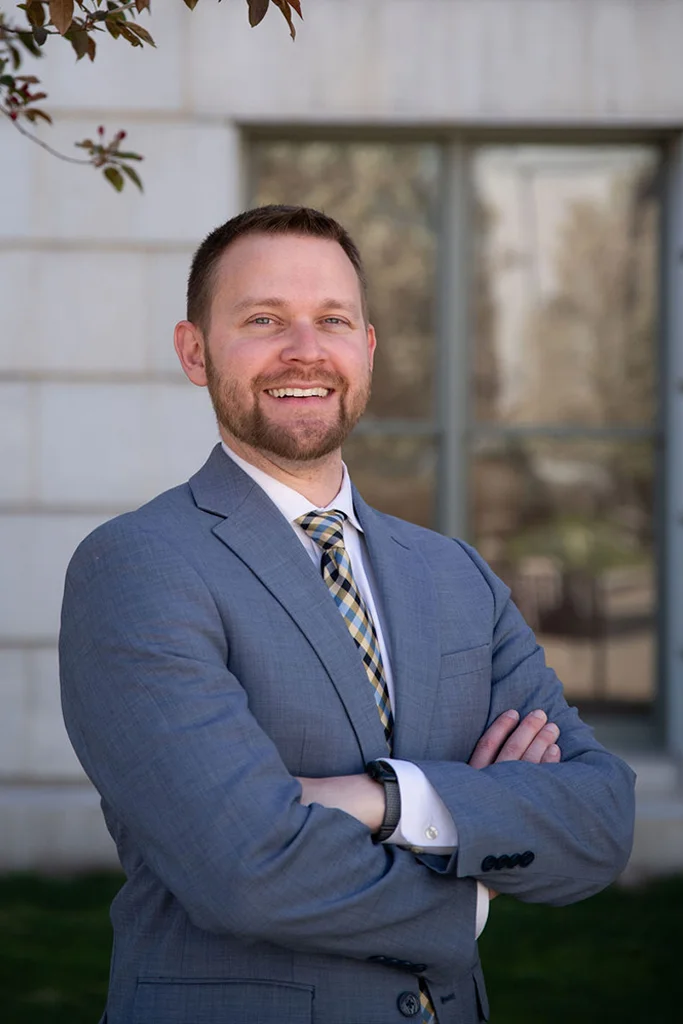
Professional license defense and criminal defense share more DNA than most people realize. At their core, both involve a government body with investigatory and prosecutorial authority pursuing adverse action against an individual, with that individual’s career and freedom on the line. Reid DeChant built his practice on exactly that kind of high-stakes adversarial representation. As a former public defender who handled an enormous volume of cases across Denver, Broomfield, and Adams County, including charges ranging from misdemeanors to homicide, Reid developed the cross-examination skills, evidentiary instincts, and hearing room composure that translate directly into professional licensing defense.
Reid’s training at the Trial Lawyers College, the program founded by legendary attorney Gerry Spence, shaped a deeply client-centered approach to representation. That matters in licensing defense because the person sitting across from you at a medical board informal conference is not just a licensee with a procedural problem. That person built a career around patient care and is watching it face an existential threat. Reid’s approach to client communication, which the firm describes as transparent and designed to keep clients genuinely informed at every decision point, is particularly valuable in licensing proceedings where the procedural posture shifts quickly and where clients must make informed choices about whether to accept a stipulation, request a formal hearing, or pursue consent agreement terms.
The firm’s track record includes dismissed charges in high-pressure proceedings before administrative bodies as well as jury and bench trials. Reid has been recognized by national and peer legal organizations and maintains active membership in the National Association of Criminal Defense Lawyers and the Colorado Criminal Defense Bar, reflecting a commitment to staying current on investigatory and procedural strategies that translate across practice areas. For a PA whose license is under investigation, the value of that adversarial advocacy experience is concrete: someone who has spent years challenging government evidence, cross-examining investigators, and identifying procedural defects brings that same discipline to a licensing proceeding.
What Happens After the Colorado Medical Board Opens an Investigation
Most PAs first learn about a board investigation when they receive a letter from the Colorado Medical Board advising them that a complaint has been received and requesting a written response. That letter deserves careful attention, because the response you submit is not a casual explanation. It becomes part of the official record, will be reviewed by the board’s legal staff and investigative personnel, and may ultimately be used against you in any formal proceeding. Submitting a rushed or poorly framed response is one of the most common errors PAs make in the early stages, and it is one of the hardest to correct later.
After the initial response, the board’s Office of Investigations may conduct interviews, request medical records, consult expert reviewers, and coordinate with other agencies including law enforcement, the DEA, or the Colorado Physician Health Program. This phase can last months. During that period, a PA who is not represented has no visibility into what evidence is being gathered or how the investigation is developing. An attorney representing you can communicate with the board on your behalf, request information about the scope of the inquiry, and position your response for the best possible outcome before the board makes any formal determination.
If the investigation leads to a finding that merits action, the board may offer an informal conference, propose a stipulated disposition, or file a formal complaint initiating a hearing under the Colorado Administrative Procedures Act before an administrative law judge. Formal hearings take place through the Office of Administrative Courts, located in Denver. These proceedings share significant procedural characteristics with civil litigation, including discovery, witness examination, and legal briefing, but they operate under different evidentiary rules and with adjudicators who specialize in regulatory rather than criminal or civil matters. Having a PA license defense attorney in Denver who understands this specific procedural environment matters far more than having a general litigator who is encountering it for the first time.
One practical note that PAs often overlook: board discipline that results in any formal adverse action will typically be reported to the National Practitioner Data Bank. An NPDB report follows a licensee to every state in which they apply, every hospital and clinic that credentialing reviews, and every federal program in which they participate. Preventing a reportable action, or limiting the scope of what gets reported, is often as important as the licensing outcome itself. Any attorney advising you on a Colorado Medical Board matter should address the NPDB implications of every potential resolution from the outset.
Questions About PA License Defense in Colorado
What should I do if I receive a letter from the Colorado Medical Board?
Do not respond without legal guidance. The response you submit becomes a permanent part of your record and will be evaluated by investigators and attorneys who have handled hundreds of similar matters. Retain a physician assistant license defense attorney in Denver before submitting anything, even if the complaint seems unfounded or easily explained.
Can the board suspend my license before I have a hearing?
Yes. Colorado law authorizes the Medical Board to issue an emergency suspension of a license when it determines that continued practice poses an immediate threat to public health or safety. Emergency suspensions take effect before any formal hearing and require you to act quickly to protect your ability to practice while the underlying matter is adjudicated.
Do I have to self-report a DUI or criminal charge to the Colorado Medical Board?
Colorado law requires licensed health care professionals to report certain criminal actions. The reporting requirements and timelines are specific, and failing to self-report when required can itself become an independent ground for discipline separate from the underlying criminal matter. A Colorado PA license defense attorney can advise you on what your specific obligation is given the nature of the charge and its current status.
What is the difference between an informal conference and a formal hearing?
An informal conference is a meeting between the licensee and board members or staff, typically without formal evidentiary procedures. It may result in a consent agreement or stipulated discipline. A formal hearing is an adjudicatory proceeding before an administrative law judge, with testimony, evidence, and legal briefing. Informal conferences can produce binding discipline, so they require the same serious legal preparation as formal hearings.
Will a board complaint affect my malpractice insurance?
Board complaints and any resulting formal discipline may need to be disclosed on malpractice insurance applications and renewals. Reportable discipline can affect coverage terms, premiums, and insurability. This is one of several collateral consequences that should be factored into how you approach the defense of a licensing matter from the beginning.
My supervising physician is also under investigation. How does that affect my case?
When both a PA and their supervising physician face board inquiries arising from the same circumstances, the interests of those two licensees are not necessarily aligned. A supervising physician facing their own discipline may characterize the collaboration agreement or clinical supervision in ways that shift responsibility. You and your supervising physician should each have independent legal representation to ensure your defense is not compromised by the other’s strategic choices.
Can I continue practicing while the investigation is pending?
In most cases, yes, unless the board has issued an emergency suspension order. However, some employers, hospital systems, and credentialing bodies have their own policies that may affect your ability to practice upon learning of a pending investigation. You should understand your employment contract and any reporting obligations to your employer or clinical affiliations in addition to your obligations to the board.
What happens if the Colorado Medical Board and law enforcement are investigating the same conduct?
Parallel investigations by the Medical Board and a law enforcement agency, such as concurrent scrutiny of prescribing practices by the DEA and the board, create serious risks. Statements made to the Medical Board are generally not protected by the Fifth Amendment in the way that statements made in a criminal context are. An attorney representing you in a dual-track investigation must coordinate strategy across both proceedings to avoid having cooperation in one forum harm you in the other.
Is a consent agreement a good outcome in a Medical Board proceeding?
It depends entirely on the terms and on what a formal hearing would likely produce. A consent agreement that imposes monitored practice, education requirements, and no license suspension may be preferable to a formal hearing that risks a more serious outcome. But some consent agreements contain conditions that make continued employment impossible or that function as a de facto license restriction. The right answer requires understanding both what the board is likely to do at a formal hearing and what specific terms are on the table.
How long does a Medical Board investigation typically take in Colorado?
Investigations vary considerably in length depending on the complexity of the allegations, the number of complaints, whether expert review is required, and whether there are concurrent criminal or regulatory proceedings. Some investigations resolve within several months. Others involving complex prescribing patterns, multiple complainants, or parallel federal inquiries can extend considerably longer. An attorney representing you can often provide more realistic timelines based on the specific nature of the complaint and the current volume of board proceedings.
Does board discipline in Colorado affect my ability to practice in other states?
Yes. Colorado Medical Board discipline that results in a reportable action is entered in the National Practitioner Data Bank and is also shared through interstate compact and licensure notification processes. States where you hold or apply for licensure will typically be notified of formal Colorado discipline. Preserving your ability to practice across state lines is one reason why the outcome of a Colorado proceeding has implications that extend far beyond this state.
PA License Defense Representation Across Metro Denver and Colorado’s Front Range
DeChant Law represents physician assistants and other health care professionals facing licensing investigations and proceedings throughout the Denver metropolitan area and along the Front Range corridor. That includes PAs practicing in Denver proper, including those affiliated with major hospital systems, academic medical centers, and outpatient practices throughout Capitol Hill, Cherry Creek, Congress Park, and the Stapleton and Northfield areas. Clients come to the firm from Aurora, Lakewood, Littleton, Englewood, Westminster, Thornton, Northglenn, Commerce City, and Brighton, as well as from the southern suburban communities of Centennial, Greenwood Village, and Lone Tree. The firm also handles matters for PAs in the Boulder and Longmont corridors, in Jefferson County communities including Golden, Arvada, and Wheat Ridge, and in Douglas County, including Parker and Castle Rock. For clients in Fort Collins, Loveland, Greeley, Pueblo, or Colorado Springs who are facing Medical Board proceedings coordinated through Denver, Reid DeChant provides representation that follows the case wherever it needs to go.
Denver Physician Assistant License Defense Attorney at DeChant Law
A Medical Board investigation does not resolve itself in your favor simply because the underlying complaint lacks merit. The process requires active, informed legal defense from the moment you receive notice that an inquiry has begun. Reid DeChant is a Denver physician assistant license defense attorney who brings the kind of adversarial trial experience and client-centered advocacy that this type of representation demands, without the detached, case-file approach that leaves licensees making critical decisions without real understanding of their options.
Reach out to DeChant Law directly to schedule a confidential consultation about your Colorado Medical Board matter. The earlier in the investigation process you engage legal representation, the more options you have. Call the firm or send a direct inquiry to discuss where your matter stands and what a defense strategy would look like given the specifics of your situation.