
Breckenridge Vehicular Assault and Vehicular Homicide Defense Lawyer
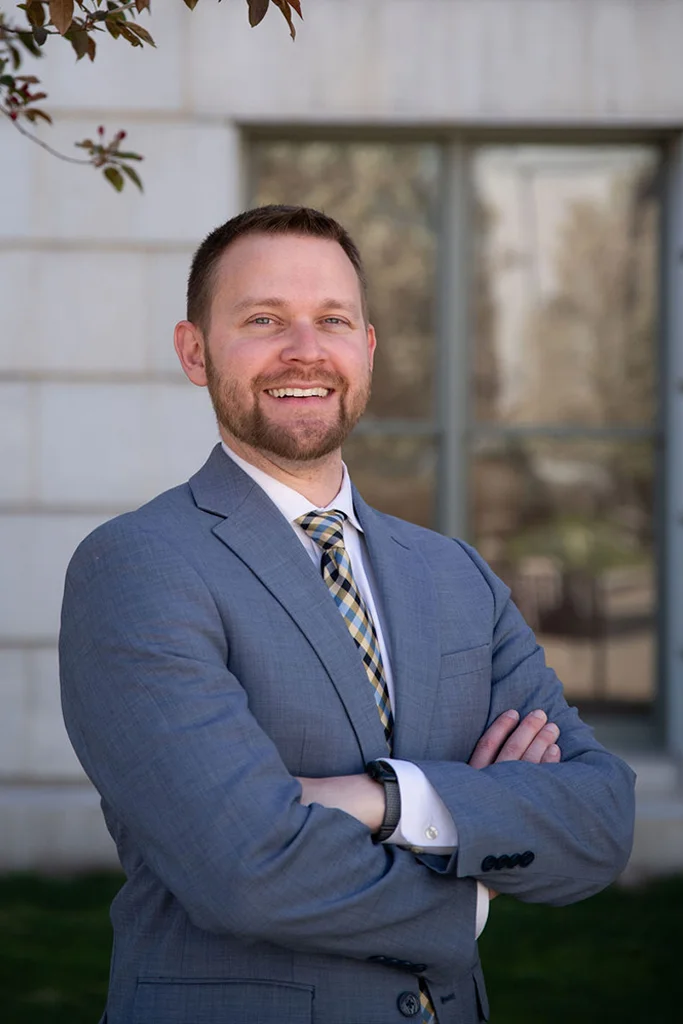
A traffic collision becomes a criminal prosecution the moment law enforcement decides that the driver’s conduct crossed a line from accident into criminal negligence or impairment. In Summit County, where mountain roads, ski season congestion, and alpine weather combine with one of Colorado’s most active DUI enforcement corridors, vehicular assault and vehicular homicide charges carry consequences that reach far beyond a fine or license suspension. Reid DeChant of DeChant Law defends people facing these charges in Breckenridge and throughout the surrounding region, bringing trial experience built from hundreds of cases across Denver, Adams, Broomfield, and Jefferson counties to bear on some of the most serious accusations in Colorado criminal law.
What Colorado Law Actually Charges in These Cases
Vehicular assault in Colorado occurs when a driver causes serious bodily injury to another person while operating a motor vehicle under the influence of alcohol or drugs, or while driving in a manner that constitutes reckless driving. The charge is a Class 4 felony when the driver is under the influence, and a Class 5 felony when the prosecution proceeds on a recklessness theory without an impairment component. Serious bodily injury under the statute is a defined term, and prosecutors and defense attorneys often dispute whether a victim’s injuries meet the legal threshold. That dispute matters enormously because the difference between a felony conviction and a misdemeanor outcome can shape the rest of a person’s life.
Vehicular homicide is the most serious charge in this category. When a person dies as a result of a collision, Colorado prosecutors decide whether to charge under the DUI theory, which is a Class 3 felony, or the reckless driving theory, which is a Class 4 felony. The distinction is significant. A Class 3 felony conviction in Colorado carries a presumptive range of four to twelve years in the Department of Corrections. In high-profile cases, particularly those involving fatalities on a well-traveled Summit County road, prosecutors face considerable community pressure to seek prison sentences. Understanding how that pressure shapes charging decisions is part of preparing a real defense.
How These Cases Develop From the Crash Scene Forward
The investigation in a vehicular assault or homicide case typically begins at the crash scene and involves layers of evidence collection that unfold over days, weeks, and sometimes months. Law enforcement will secure the scene, document vehicle positions, photograph road conditions and skid marks, and gather witness statements. In fatal collisions on or near roads like Highway 9 or Highway 6 through Summit County, Colorado State Patrol often takes the lead, and reconstruction specialists may be called in to calculate speeds, angles of impact, and stopping distances. The quality and completeness of that reconstruction work is something a defense lawyer must scrutinize carefully, because accident reconstruction involves assumptions, and assumptions can be challenged.
If impairment is suspected, a blood draw will follow. In Summit County, where altitude affects how the body metabolizes alcohol and where blood draws sometimes happen hours after a collision due to distance from medical facilities, the timing of the sample and the chain of custody both become critical. Reid DeChant has spent substantial time in his practice focusing on DUI science and the specific ways that chemical testing can yield unreliable results. That focus was built on defending DUI cases at the trial level, including cases where the central dispute was the reliability of the blood or breath sample. In a vehicular homicide or assault case, those same technical arguments carry even higher stakes.
After the investigation concludes, the case goes to the District Attorney’s Office in Summit County, located in Breckenridge. The DA’s office will evaluate the strength of the reconstruction report, the toxicology results, the witness accounts, and the defendant’s statement, if one exists. Charging decisions often happen before the defense has had any opportunity to review the evidence, which is one reason early legal involvement shapes the trajectory of these cases. What happens in the weeks between a crash and a formal filing can affect what charges are ultimately brought and whether certain evidence gets preserved or lost.
The Defense Arguments That Matter Most in Summit County Cases
A collision is not automatically a crime. Colorado law requires proof of specific mental states and specific causal connections, and defense work in these cases means examining each one carefully. On the impairment side, the prosecution must connect the driver’s alleged intoxication to the causation of the crash. A driver who had alcohol in their system but who was struck by another vehicle traveling across the center line is not necessarily guilty of anything. That causation question is one of the most contested issues in vehicular homicide prosecutions, and it is one that juries, when properly instructed, take seriously.
The recklessness standard presents its own set of contested issues. Reckless driving requires a conscious disregard of a substantial and unjustifiable risk. Speeding on a mountain road in poor visibility is different from speeding on a clear day at midday, and both are different from a driver who simply lost control on black ice without any prior indications of dangerous behavior. In Breckenridge and the surrounding mountain communities, road conditions play an enormous role in how collisions happen, and those conditions are often inadequately captured in prosecution narratives that focus exclusively on the driver’s conduct.
Expert witnesses are often necessary and central in these cases. A qualified accident reconstruction expert retained by the defense can review the same physical evidence the prosecution used, apply different analytical methods or correct methodological errors, and reach different conclusions. The same principle applies to toxicology. The defense has the right to examine the calibration records of testing equipment, the credentials of the analysts who processed the sample, and the conditions under which the sample was stored and analyzed. Reid’s background in DUI defense means he enters these cases already familiar with the technical arguments that shift outcomes at trial.
Questions People Ask When They First Contact DeChant Law About These Charges
Can vehicular assault or homicide charges be reduced to something less serious?
Reductions do occur, but they depend heavily on the specific evidence in each case. Where the prosecution’s impairment or recklessness evidence has weaknesses, there is meaningful leverage in plea negotiations. In cases that go to trial, juries have acquitted or returned lesser verdicts when the defense successfully challenged reconstruction conclusions or toxicology results. No outcome can be guaranteed, but a thorough early investigation often reveals the arguments that make reduction or dismissal realistic.
What happens at the Summit County District Court level for these charges?
Felony charges in Summit County are handled at the Summit County District Court in Breckenridge. Cases typically move through advisement, preliminary hearing, arraignment, and pretrial motions before reaching trial. The preliminary hearing is an early and important stage where the defense can cross-examine law enforcement witnesses and begin testing the prosecution’s theory. In some cases, charges are reduced or dismissed at the preliminary hearing stage if the evidence does not support the charged offense.
How does the DMV license revocation process work alongside the criminal case?
A vehicular assault or homicide arrest that involves alleged impairment typically triggers both a criminal case and a separate DMV proceeding against the driver’s license. These are parallel processes with different procedures and different timelines. Losing the DMV hearing does not determine the outcome of the criminal case, and vice versa. Reid DeChant’s practice includes specific experience in DMV express consent hearings, which means both tracks of the case receive attention rather than letting one proceed without focus while the other is being defended.
Is it possible to stay out of prison even if convicted?
Sentencing in Colorado vehicular assault and homicide cases involves the exercise of judicial discretion within statutory ranges, and outcomes vary based on the defendant’s history, the specific facts of the case, and how the defense presents mitigation. For Class 5 felony vehicular assault without a DUI element, probation is possible. For Class 3 vehicular homicide, prison is presumptive, though extraordinary mitigation can affect the outcome. Sentencing advocacy is a distinct skill from trial advocacy, and preparing for both possibilities is part of a thorough defense.
Does it matter that the crash happened on a ski resort access road or a private property?
Colorado’s vehicular assault and homicide statutes apply to operation of a motor vehicle broadly, and questions about jurisdiction on resort access roads or private property can arise in specific factual situations. Whether a particular road is a public highway, and whether Colorado’s traffic laws apply in a given location, is sometimes a genuine legal issue worth examining depending on where the collision occurred.
What should someone avoid doing after a serious collision in Summit County?
Speaking to law enforcement beyond what is legally required is one of the most consequential decisions a person makes in these situations. Statements made at the scene, at the hospital, or in any follow-up contact with investigators can be used as admissions. The right to remain silent applies from the moment of detention, and exercising it is not an admission of guilt. Contacting legal counsel before any voluntary interviews or statements is the most important step a person can take to preserve their options.
Defending Vehicular Assault and Homicide Charges in Breckenridge
These cases require a lawyer who is genuinely prepared to take them to trial. Reid DeChant has tried cases at the trial level across multiple Colorado jurisdictions, including DUI and assault charges that went before juries and resulted in not guilty verdicts. His approach draws on the storytelling principles developed through Trial Lawyers College, which begins with understanding the full picture of a client’s life and the specific circumstances that brought them to this point. That is not a formula. It is the actual work of building a defense that holds together when tested in a Summit County courtroom. If you are facing vehicular assault or vehicular homicide charges in Breckenridge or elsewhere in Summit County, DeChant Law is prepared to evaluate the evidence, identify the arguments that matter, and represent you through every stage of what comes next.