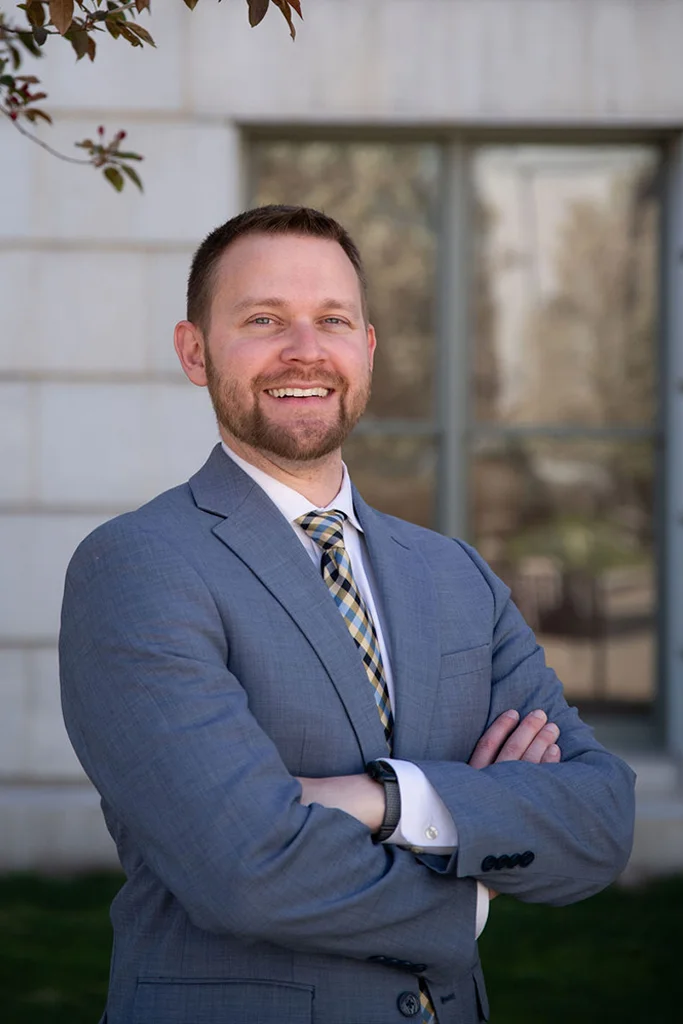
Woodland Park Felony Lawyer
A felony charge in Teller County carries consequences that reach far beyond whatever sentence a judge might impose. A conviction follows you into job applications, housing searches, professional licensing boards, and child custody proceedings for years afterward. When someone in Woodland Park is looking at that kind of exposure, the question is not whether to fight. The question is how. At DeChant Law, Woodland Park felony lawyer Reid DeChant brings the kind of courtroom experience that actually matters when the government is pushing for a conviction.
What Felony Charges Look Like in Teller County
Woodland Park sits within Teller County’s 4th Judicial District, which also covers Cripple Creek and serves the broader mountain corridor along Highway 24. The courts here handle everything from drug distribution cases connected to the I-25 corridor to assault charges arising from domestic disputes in residential neighborhoods, property crimes, weapons offenses, and felony DUI cases involving drivers on mountain roads.
Colorado classifies felonies into six categories, from Class 1 at the most serious end down to Class 6, and then there are drug felonies with their own separate classification scheme. The classification determines the presumptive sentencing range, but it does not dictate what actually happens to your case. Prosecutors have discretion, judges have discretion, and defense attorneys who understand how to use that discretion on behalf of their clients can change outcomes in ways that the raw statute does not suggest are possible.
What you are charged with on the day of arrest is rarely the final word. Charges get amended, reduced, or dismissed based on how the defense handles the investigation, the evidence, and the negotiations. That is true in Teller County courts just as much as it is in Denver or Jefferson County.
How Colorado Felony Cases Actually Move Through the System
Most people arrested on a felony charge have never been through this before, and the sequence of events is not obvious. After an arrest, there is a bond hearing, usually within hours. Then comes the advisement, where formal charges are presented. A preliminary hearing or grand jury proceeding follows, depending on how the prosecution decides to proceed. If the case is not resolved early, it moves through a preliminary hearing where the judge decides whether probable cause supports the charges, and then to arraignment, and eventually to pretrial motions and either a disposition or trial.
Each of those stages is an opportunity. Preliminary hearings are not just administrative formalities. They require the prosecution to put witnesses on the stand and present evidence, which gives the defense a chance to cross-examine before trial. Suppression motions filed before trial can eliminate evidence that was gathered illegally, and when that evidence is the centerpiece of the case, a successful motion can force a dismissal or a favorable plea offer. Reid has worked cases at every one of these stages, both as a public defender and in private practice, in courts throughout the Denver metro and across Colorado.
The 4th Judicial District has its own culture and its own expectations. Understanding how prosecutors there approach felony cases, what arguments tend to land with judges in that courtroom, and what local practices apply to bond hearings and scheduling matters in practice. That local knowledge does not replace the substantive legal work, but it informs how that work is actually deployed.
The Weight of a Felony Record in Colorado
Colorado is not a state that makes it easy to put a felony conviction behind you. Record sealing for felony convictions is possible in some situations, but eligibility depends heavily on the type of offense and the amount of time that has passed. Many felony convictions are simply not sealable, which means the record is permanent and visible to employers, landlords, and licensing agencies.
Some professional licenses are automatically revoked or denied upon a felony conviction. Teachers, nurses, physicians, contractors, and commercial drivers all face licensing consequences that operate completely separately from the criminal sentence itself. Someone who keeps their job while on probation may still lose their professional license because of the conviction, and that can be economically devastating in ways that dwarf the criminal penalties.
For anyone who is not a United States citizen, a felony conviction can trigger immigration consequences including removal proceedings. These consequences are not automatic in every case, and the specific charge matters enormously, but they have to be part of the analysis from the beginning of the defense, not as an afterthought once a plea deal is already on the table.
Understanding what a conviction actually means for your specific life situation is part of why the legal analysis here goes beyond just reading the sentencing statute.
Questions Woodland Park Residents Ask About Felony Defense
If I was arrested in Woodland Park, where will my case be heard?
Felony cases in Woodland Park are handled in the 4th Judicial District Court, which is located in Cripple Creek. Teller County is a small jurisdiction compared to Denver or Jefferson County, and the dynamics of practicing there reflect that. Reid has experience practicing in multiple Colorado jurisdictions and is familiar with how mountain and rural district courts operate.
What is the difference between a plea agreement and going to trial?
A plea agreement resolves the case without a trial, typically involving a reduced charge, a reduced sentence, or both, in exchange for a guilty plea. Going to trial means the prosecution must prove every element of the charge beyond a reasonable doubt to a jury or judge. Which path makes more sense depends entirely on the strength of the evidence, the specific charges, and what you stand to lose or gain. There is no universal right answer, and a defense attorney who pushes everyone toward one option or the other is not serving the client well.
Can felony charges be reduced to misdemeanors in Colorado?
Yes, in some circumstances. Charge reductions happen through plea negotiations, through diversion programs where they apply, and sometimes through motions that successfully challenge the factual basis for the more serious charge. Class 6 felonies in particular sometimes get charged in the alternative with misdemeanor options, which creates negotiating room. Whether a reduction is available depends on the facts of the specific case and the policies of the district attorney’s office handling it.
What happens at a preliminary hearing in a Colorado felony case?
At a preliminary hearing, the prosecution presents evidence and witnesses to establish probable cause, meaning the judge must find that there is reason to believe a crime was committed and that the defendant committed it. The standard is lower than proof beyond a reasonable doubt, but it still requires putting witnesses on the stand and exposing the prosecution’s theory. Defense attorneys use preliminary hearings to lock in witness testimony, test the strength of the evidence, and sometimes expose weaknesses that change the entire trajectory of the case.
Does a felony charge always mean prison time if convicted?
Not necessarily. Colorado judges have a range of sentencing options depending on the offense class and the defendant’s history. Probation, community corrections, and alternative sentencing programs are available for some felony convictions, particularly at the lower end of the classification scale and for first-time offenders. However, certain offenses carry mandatory minimums or presumptive prison sentences that limit judicial discretion significantly. Understanding the specific charge is essential to understanding what outcomes are actually possible.
How long does a felony case in Teller County typically take?
It varies considerably. A case that resolves early through a plea can be over in a matter of months. A case that proceeds through preliminary hearing, pretrial motions, and trial can take a year or more. The timeline is also affected by court scheduling, how complex the discovery is, and whether expert witnesses are involved. Clients should expect the process to take longer than they initially anticipate, and should be working with an attorney from the very beginning rather than waiting to see how things develop.
Is it possible to fight a felony charge even when there is strong evidence against me?
Yes. Strong evidence is not necessarily admissible evidence, and admissible evidence is not necessarily proof beyond a reasonable doubt. Evidence can be challenged on constitutional grounds, on chain of custody issues, on reliability of forensic methods, or on credibility of witnesses. A jury that has reasonable doubt about any element of the offense must acquit. That is not a technicality. That is the system working as designed, and it is why trial preparation matters as much as it does.
What to Expect Working with Reid DeChant on a Felony Case
Reid’s background as a public defender in Denver, Broomfield, and Adams County gave him exposure to the full spectrum of felony cases, from theft and drug charges to assault, sexual assault, and homicide. That experience shapes how he approaches private practice. He came away from that work understanding that clients facing felony charges are often at the lowest point of their lives, and that what they need is someone who genuinely understands their situation and fights for an outcome that makes sense for them specifically, not just a standard resolution.
Reid also trained at the Trial Lawyers College, which centers its approach on the power of storytelling in the courtroom. That is not a vague philosophy. It translates directly into how a defense presents its case to a jury, how witness examination is conducted, and how a client’s full circumstances are brought into the courtroom rather than reduced to a charge sheet. Real defense work means the jury understands who is standing in front of them, not just what the prosecution says they did.
If you are facing felony charges in Woodland Park or anywhere in Teller County, a Woodland Park felony attorney at DeChant Law will sit down with you, look at the actual facts, and give you an honest assessment of where things stand and what can be done.
Contact DeChant Law to speak with Reid about your case.