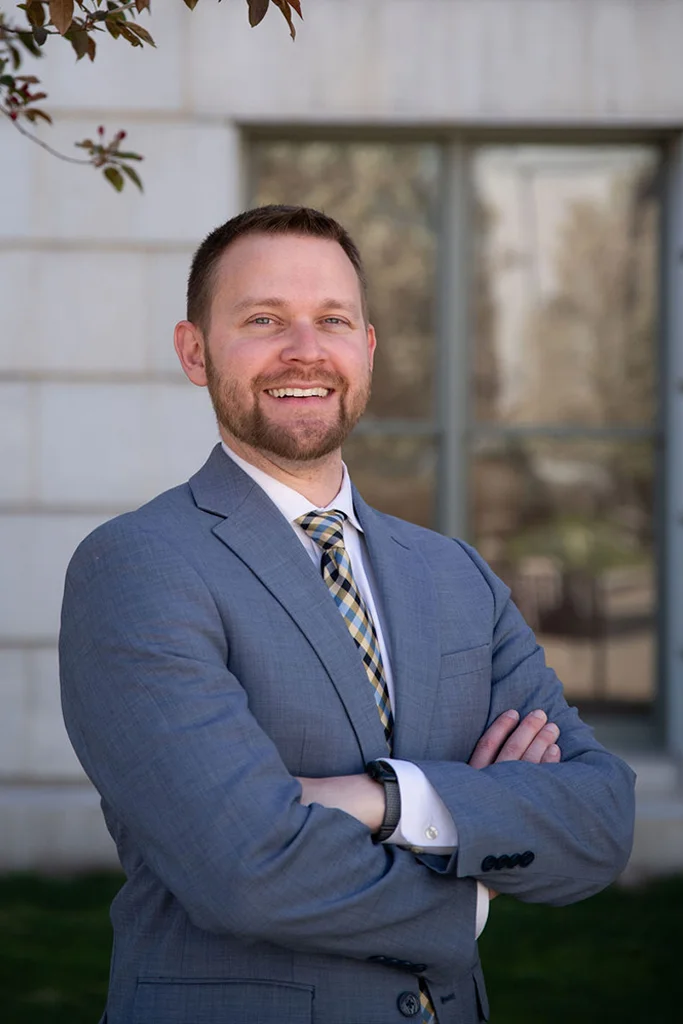
Erie Felony Lawyer
A felony charge in Colorado does not stay in the courtroom. It follows you into job applications, housing decisions, professional licensing, and firearm rights. For residents of Erie and the surrounding Boulder and Weld County communities, the stakes attached to a felony conviction are high enough that the lawyer you hire, and how quickly you engage one, genuinely shapes what happens next. Erie felony lawyer Reid DeChant brings public defender experience across multiple Front Range counties combined with focused private practice defense, and he understands that clients arriving at his door are often at the lowest point of their lives, not just a file to be processed.
What Colorado’s Felony Classification System Actually Means for Your Case
Colorado divides felonies into six classes, with Class 1 carrying the most severe consequences and Class 6 at the lower end of the spectrum. Where your charge lands on that scale drives nearly everything: the presumptive sentencing range, whether mandatory minimums apply, how prosecutors approach plea negotiations, and what your record looks like if you are ultimately convicted.
Class 1 and Class 2 felonies, such as first-degree murder or certain sexual assault charges, carry sentences measured in decades. Class 3 and Class 4 felonies cover a wide range of serious charges including assault, robbery, and some drug trafficking offenses, with presumptive ranges running from several years to over a decade in the Department of Corrections. Class 5 and Class 6 felonies are sometimes called “wobbler” territory because they can be charged as either a felony or misdemeanor depending on circumstances, and skilled defense work often focuses on pushing cases into that lower tier or into misdemeanor resolutions entirely.
There are also extraordinary risk enhancements that can push a sentence well above the presumptive range, particularly for offenses involving weapons, children, or repeat offenders. Understanding where your charge sits, and whether any enhancements apply, is step one in building any realistic defense strategy.
How Felony Cases in Boulder and Weld Counties Typically Progress
Erie straddles Boulder and Weld Counties, and which county prosecutes your case affects more than just geography. Boulder County cases are heard at the Boulder Justice Center, while Weld County cases proceed through the Weld County District Court in Greeley. The two offices have different prosecution cultures, different tendencies in plea negotiations, and different judges applying Colorado’s sentencing guidelines. A defense attorney who understands both environments is not just a convenience, it is a genuine tactical advantage.
After a felony arrest, the first formal court date is an advisement, where charges are read and bond is addressed. A preliminary hearing follows, which serves as one of the earliest opportunities for defense counsel to test the prosecution’s evidence. If the case is not dismissed or resolved before trial, it proceeds to district court for pre-trial motions and eventually a jury trial if no agreement is reached.
That process sounds linear on paper. In practice, cases rarely move in a straight line. Evidence gets suppressed on Fourth Amendment grounds. Witnesses recant or prove unreliable. Forensic results get challenged. The work of a felony defense attorney happens at every stage of that timeline, not just the trial date circled on a calendar.
Charges Reid DeChant Defends in Erie and the Front Range
The range of felony charges that end up in a Boulder or Weld County courtroom reflects the diversity of the communities they serve. Drug-related felonies remain common, from possession with intent to distribute to distribution of controlled substances, with charges often stemming from traffic stops on US-287, US-36, or I-25. Assault charges, including second-degree assault and vehicular assault, frequently arise out of domestic situations, bar incidents, or car accidents where injury is alleged.
Theft offenses escalate quickly to felony territory when the value of property exceeds $2,000, and burglary charges involving a building or dwelling are almost always felony-level at the outset. Domestic violence felony charges carry their own procedural complications, including mandatory protection orders, restrictions on firearms possession, and mandatory arrest policies that can result in charges even when the alleged victim does not want prosecution to proceed.
Reid has handled all of these charge categories in his time as a public defender in Denver, Broomfield, and Adams County and in private practice. That includes cases as serious as homicides and sexual assaults. He approaches each case by understanding the client’s story first, then building a defense around what the evidence actually shows and what the prosecution actually has to prove.
Questions Erie Residents Ask About Felony Charges
Can a felony charge in Colorado be reduced to a misdemeanor?
Yes, in some situations. Deferred sentences, plea agreements, and successful diversion programs can all result in a felony charge being reduced or dismissed entirely. Class 5 and Class 6 felonies are most frequently subject to these kinds of resolutions. The specifics depend on the charge, your criminal history, and how the prosecution values the strength of their case against you.
What is the difference between a deferred judgment and a plea to a felony?
A deferred judgment allows you to plead guilty while the conviction is held in abeyance for a set period. If you complete the conditions, the case is dismissed and you can seek to have the record sealed. A straight guilty plea results in an immediate conviction that remains on your record unless you later qualify for sealing. The two paths look similar at first but have very different long-term consequences.
Will a Colorado felony conviction affect my ability to own a firearm?
Yes. A felony conviction in Colorado, as in all states, results in the loss of federal and state firearm rights. This is permanent unless your rights are restored through specific legal proceedings, which are limited in scope. For clients who hunt, work in fields requiring firearm access, or simply value that right, this collateral consequence is often as serious as the sentence itself.
My charge involves an alleged victim who no longer wants to press charges. Does that end the case?
Not automatically. Colorado prosecutors have independent authority to pursue charges regardless of what the alleged victim wants. This is especially common in domestic violence cases, where mandatory prosecution policies are widespread. The alleged victim’s willingness to cooperate can influence how a case resolves, but the decision to drop charges rests with the DA’s office, not the complaining witness.
How long will a felony case in Boulder or Weld County take to resolve?
There is no fixed timeline. Cases that resolve through early plea agreements can close in a few months. Cases heading toward trial, or involving complex forensic evidence, multiple charges, or pre-trial motions, routinely take a year or longer. The pace also depends on court dockets, how quickly discovery is provided, and whether contested hearings are necessary along the way.
What happens at a preliminary hearing and can it help my defense?
A preliminary hearing is an opportunity to challenge whether the prosecution has sufficient evidence to proceed to trial. The standard is probable cause, which is lower than proof beyond a reasonable doubt, but a skilled defense attorney can use cross-examination of prosecution witnesses at this stage to lock in testimony, identify weaknesses in the case, and in some circumstances obtain a dismissal or reduction of charges before the case ever reaches district court.
Does hiring a private defense attorney make a real difference compared to a public defender?
Public defenders are often talented lawyers who know the local courts well. The structural challenge is caseload. A private defense attorney handles fewer cases and can dedicate substantially more time to investigation, pre-trial motions, and client communication. Reid spent years as a public defender and saw firsthand how difficult it is to give every client the attention their case deserves under high caseload conditions. That experience shapes how he approaches private representation.
Facing a Felony Charge in the Erie Area: What You Need From a Defense Attorney
What matters most in a felony case is not how loudly your attorney argues in court. It is how thoroughly they understand your case before you ever walk into a courtroom. That means reviewing every piece of discovery, testing every piece of evidence, and developing a theory of the case that holds together under pressure. Reid learned that approach through Trial Lawyers College training and through years of courtroom experience across multiple Front Range counties. The record results at DeChant Law reflect that approach, including DUI and assault cases dismissed or resolved with not-guilty verdicts across Jefferson, Adams, Arapahoe, and other Colorado counties.
If you are dealing with a felony charge in Erie, the work begins now, not at the trial date. An Erie felony defense attorney who gets involved early can preserve evidence, address bond conditions, challenge the basis for charges, and shape how a case develops from its earliest stages. Contact DeChant Law to talk through the specifics of your situation.