
Denver County Vehicular Assault and Homicide Defense Lawyer
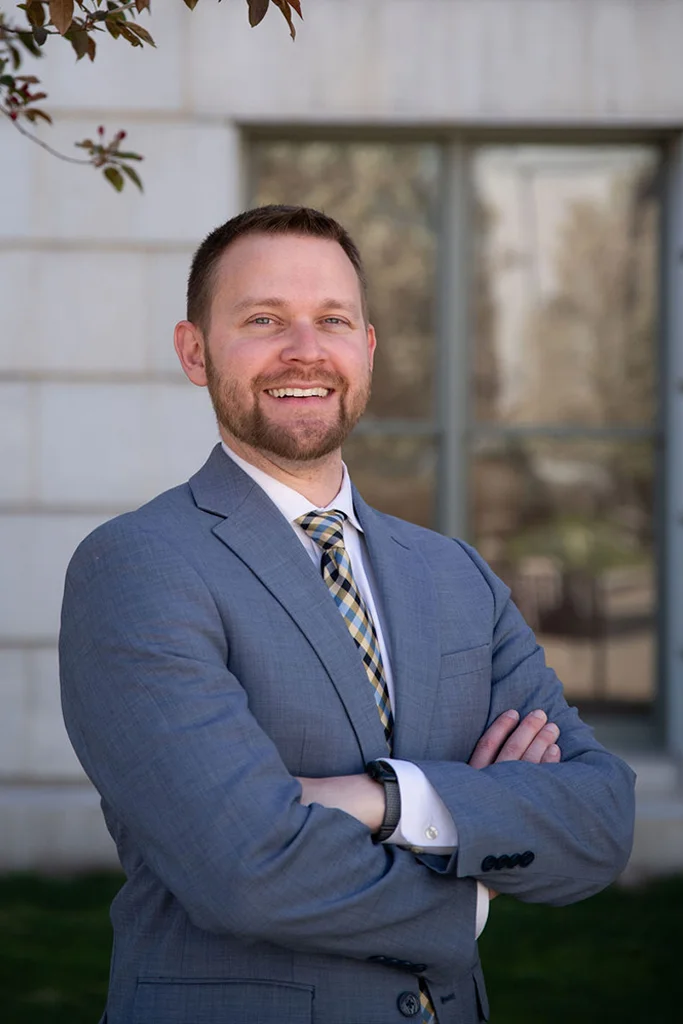
A crash that results in serious injury or death can transform in hours from a traffic matter into a felony prosecution carrying years in prison. Colorado law treats vehicular assault and vehicular homicide as among the most aggressively prosecuted traffic-related offenses on the books, and Denver County courts reflect that seriousness. Reid DeChant has represented clients facing the full weight of these charges, bringing courtroom experience from his time as a public defender across Denver, Adams, and Broomfield counties into every case he handles in private practice.
What Colorado Law Actually Requires to Charge These Offenses
Vehicular assault under Colorado law requires that a driver operated a vehicle in a reckless manner or while under the influence of drugs or alcohol, and that the driving caused serious bodily injury to another person. Vehicular homicide requires the same categories of conduct but applies when someone dies as a result. The distinction between reckless driving and DUI-based charges matters significantly because they carry different penalty ranges and different prosecution strategies.
A reckless vehicular assault is a class 5 felony. When the prosecution alleges the driver was under the influence at the time of the collision, the charge elevates to a class 4 felony. Vehicular homicide while reckless is a class 4 felony. Vehicular homicide while under the influence is a class 3 felony, which in Colorado carries a presumptive sentencing range of four to twelve years in the Department of Corrections. These are not suspended sentences or deferred judgments in most cases. Judges in Denver County treat these cases seriously, and the district attorney’s office typically assigns experienced prosecutors to them.
Colorado’s “serious bodily injury” threshold is broader than many people assume. Broken bones, head trauma, significant scarring, or any injury that creates substantial risk of death or permanent impairment can qualify. That means a collision that looks like a bad accident can become a class 4 felony prosecution depending on the injuries sustained and what the blood results show.
How Denver Prosecutions of These Cases Are Actually Built
The investigation that follows a serious collision is not the same as a standard DUI investigation. Law enforcement will typically deploy accident reconstruction specialists, subpoena electronic data from vehicles, obtain surveillance footage from nearby businesses or traffic cameras, and conduct witness canvasses. On major Denver roadways like I-25, I-70, C-470, and US-36, traffic cameras often capture footage of the moments leading up to a collision. That footage, if preserved, becomes a central piece of evidence.
Blood draws in these cases are nearly always conducted at a hospital, and the chain of custody for those samples becomes a significant legal issue. Hospital staff are focused on treating the patient, not on following law enforcement collection protocols. There are established rules governing how blood must be drawn, stored, and analyzed, and failures in that process can affect the reliability of the results.
Accident reconstruction reports are often treated as authoritative, but they are not infallible. These reports rely on assumptions about road conditions, vehicle speeds, tire friction coefficients, and driver behavior. An independent expert can review those assumptions, identify methodological errors, and present conclusions that directly challenge the prosecution’s narrative about what happened and why. Reid has experience working with defense experts in serious felony cases, and he understands how to evaluate reconstruction reports critically rather than accepting them at face value.
Witness accounts collected at the scene are gathered under conditions that are inherently unreliable: high stress, poor lighting, and the chaos of an active accident scene. The Trial Lawyers College training Reid received has sharpened his ability to examine how testimony was gathered and shaped, and to bring those issues effectively before a jury.
The Specific Defenses That Apply to These Charges
Recklessness is a mental state that must be proven. Under Colorado law, a person acts recklessly when they consciously disregard a substantial and unjustifiable risk. The prosecution must prove that conscious disregard, not merely that a bad outcome resulted. Accidents happen. Collisions happen. Poor driving decisions happen. The question is whether the conduct crossed the line from negligence into reckless disregard, and that line is litigated, not assumed.
In DUI-based charges, the validity of the blood or breath result is always at issue. The stop itself must have been lawful, the advisement under Colorado’s express consent law must have been given correctly, and the testing process must have complied with applicable standards. Reid has a demonstrated record of successfully challenging DMV actions arising out of DUI stops, including dismissals based on improper express consent advisements and failures to administer chemical testing within the required two-hour window. The same statutory and regulatory framework that governs those DMV actions governs the admissibility of test results in a criminal case.
Causation is another genuine issue in many vehicular assault and homicide cases. Colorado law requires that the defendant’s conduct actually caused the injury or death. In collisions involving multiple vehicles, road hazards, mechanical failures, or the actions of the injured party, causation is not automatic. A defense that challenges the causal link between the driver’s conduct and the outcome can be the difference between a felony conviction and a dismissal or acquittal.
Questions People Actually Ask About These Charges in Denver
Can a vehicular homicide charge result from a single-vehicle accident where no one was drunk?
Yes. If the prosecution can establish that the driver operated the vehicle recklessly and that recklessness caused the death of a passenger or a bystander, the charge can proceed even without alcohol or drugs in the picture. Excessive speed, street racing, or conduct like running a red light at high speed have all been the basis for reckless vehicular homicide charges in Colorado.
What happens to my driver’s license while the criminal case is pending?
If a DUI allegation is part of the charge, the DMV process runs parallel to the criminal case. License revocation can happen administratively before any conviction occurs. It is possible to contest the DMV action separately from the criminal proceeding, and the outcome of one does not automatically determine the other. Both tracks need to be addressed.
Does Colorado allow probation for vehicular homicide?
It depends on the specific charge and the defendant’s criminal history. Class 3 felony vehicular homicide carries a presumptive prison sentence, and Colorado law restricts the availability of probation for certain extraordinary risk crimes. Whether probation is an option and how to position the case for the most favorable sentencing outcome is something that must be evaluated based on the specific facts of each matter.
How long does a vehicular assault or homicide case typically take in Denver County?
These cases are complex and move slowly. Between the completion of the accident reconstruction report, toxicology results, and the preliminary hearing process, cases can extend twelve to eighteen months or longer from arrest to resolution. That timeline creates both challenges and opportunities. Evidence degrades, witnesses become harder to locate, and the defense has time to build a thorough response to the prosecution’s case.
Can the case be resolved without going to trial?
Some cases resolve through negotiated pleas to reduced charges. Others go to trial. The right path depends entirely on the facts, the strength of the evidence, and what outcome is realistically available. Accepting a plea that results in a felony conviction and a Department of Corrections sentence is not always the better choice. Reid has taken cases to trial and secured not guilty verdicts in serious felony matters, including assault charges. Whether to try a case or negotiate it is a decision made with the client, not for the client.
Will a vehicular homicide conviction affect immigration status?
A felony conviction of this nature almost certainly has serious immigration consequences, including potential grounds for removal. Non-citizen clients facing these charges need to understand those consequences as part of evaluating every option in their case. The decision to accept a plea or proceed to trial cannot be made without accounting for what a conviction means beyond the criminal sentence.
What if the accident happened outside Denver proper but within the county?
Denver County is coextensive with the City and County of Denver. Cases arising from collisions within Denver’s city limits are handled in Denver District Court. Surrounding counties like Arapahoe, Jefferson, Adams, and Douglas have their own district courts and their own prosecution offices. Reid has handled DUI-related matters across the metro area and is familiar with how different county courts approach these cases.
Facing Vehicular Assault or Homicide Charges in Denver
These cases carry consequences that extend well beyond a criminal sentence. A felony conviction affects employment, housing, professional licenses, and for non-citizens, the ability to remain in the country. The investigation has often been running for days or weeks before charges are even filed, meaning the prosecution may already have a significant head start. Reid DeChant approaches Denver vehicular homicide defense with the tenacity and courtroom experience these cases require, including the ability and willingness to take the case to trial when that is what the client’s situation demands. Transparent communication about what the evidence shows, what options exist, and what the realistic range of outcomes looks like is how DeChant Law works. Reach out to discuss your case.