Thornton DUI Defense Lawyer
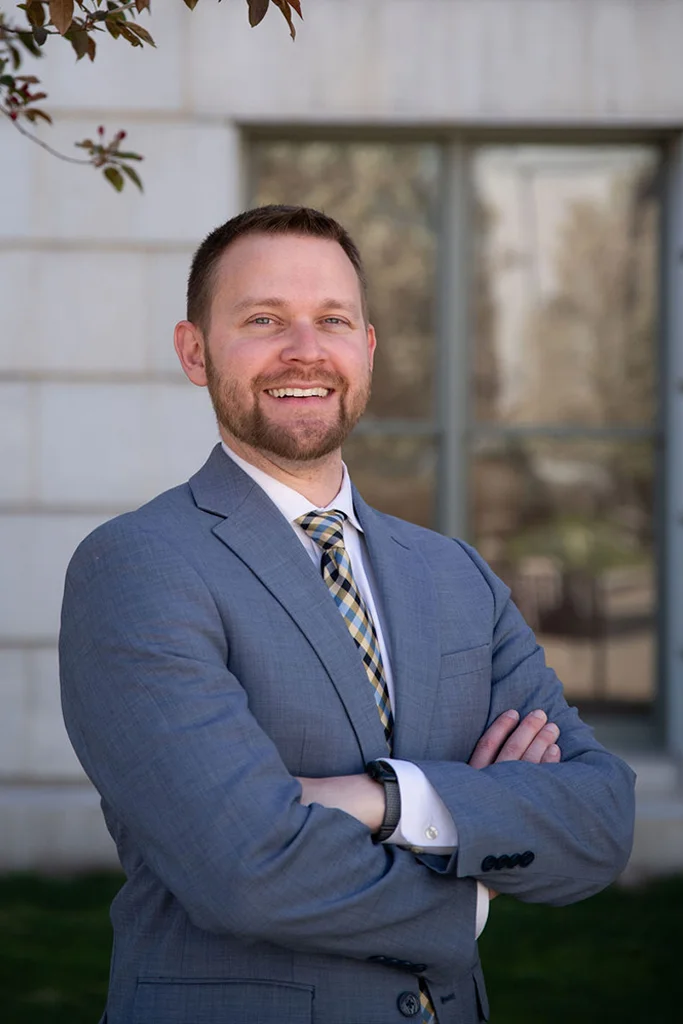
A DUI stop on I-25 near 144th Avenue or US-36 through Thornton can set off a chain of consequences that reaches far beyond a single court date. License revocation through the DMV, criminal penalties in Adams County District Court, and the long-term visibility of a conviction on background checks are all real possibilities that arrive quickly after an arrest. Thornton DUI defense lawyer Reid DeChant handles both sides of this fight, the criminal case and the DMV administrative hearing, so nothing gets missed while you are still trying to understand what happened.
What Adams County Prosecutors Actually Pursue in Thornton DUI Cases
Thornton sits firmly in Adams County, and Adams County prosecutors handle DUI cases with the full weight of Colorado’s impaired driving statutes. Reid DeChant worked as a public defender in Adams County before moving into private practice, which means he has spent time on the prosecution side of these courtrooms and understands how cases are built, evaluated, and sometimes overcharged at the charging stage.
Colorado law sets three distinct thresholds: a BAC of 0.08% or higher supports a DUI charge, a BAC between 0.05% and 0.079% supports a DWAI charge, and any detectable impairment from drugs, prescription or otherwise, can form the basis of a DUI-Drugs charge. Each of these carries different sentencing ranges, but all of them trigger the separate DMV process under Colorado’s express consent laws. That dual-track structure, one criminal, one administrative, is where people often lose ground without realizing it.
In Thornton, law enforcement conducts DUI enforcement along major corridors including Colorado Boulevard, Washington Street, and the stretch of I-25 running through the city. Officers from the Thornton Police Department and Colorado State Patrol regularly run saturation patrols, particularly on weekend nights and around events at nearby venues. Being stopped in one of these enforcement operations does not mean the stop itself was lawful or that the evidence collected afterward will hold up to scrutiny.
The DMV Hearing Is Not a Formality
After a DUI arrest in Colorado, the officer confiscates your license and issues a temporary permit. You have seven days from the date of that permit to request a DMV hearing, or your license is automatically suspended. This is entirely separate from what happens in criminal court, and most people do not realize how short that window is or how much rides on it.
The DMV hearing is a civil proceeding that determines whether your license will be revoked based on the chemical test result or a refusal to test. Winning that hearing does not resolve the criminal case, but losing it while the criminal case is still pending adds real pressure. DeChant Law handles these hearings directly and has secured dismissals in Adams County DMV express consent actions, including dismissals based on improper advisements and failure to administer the chemical test within the required two-hour window. Those are technical but consequential arguments, and they require someone who has actually made them in front of DMV hearing officers before.
For drivers with a commercial license, or those who hold a professional license in nursing, medicine, or aviation, the DMV stakes run even higher. A CDL suspension can end a career. A professional licensing board may open its own investigation independent of both the criminal case and the DMV action. These downstream consequences do not fix themselves, and they need to be part of the defense strategy from the beginning.
Where DUI Evidence Gets Challenged in Colorado
Colorado DUI prosecutions rest heavily on chemical test results, field sobriety test performance, and the arresting officer’s observations. Each of these has real vulnerabilities when examined closely.
Breath test results depend on the proper calibration and maintenance of the device, the correct administration of the test, and the absence of interfering substances. Blood test results introduce a separate chain of custody issue. Samples must be collected, stored, transported, and analyzed according to specific protocols, and deviations from those protocols can compromise the reliability of the result. A blood split, where a portion of the sample is preserved for independent testing, is a right under Colorado law, and exercising it can open the door to a defense expert’s analysis.
Field sobriety tests are standardized, but they are not infallible. The Horizontal Gaze Nystagmus test, the Walk-and-Turn, and the One-Leg-Stand all require the officer to administer them correctly on an appropriate surface and to account for factors like footwear, lighting, nervousness, and physical conditions that affect performance. An officer who deviates from the standardized instructions produces results that may not be scientifically valid.
The stop itself also matters. If the officer lacked reasonable suspicion to initiate the traffic stop, everything collected afterward may be suppressible. This is not a technicality in the pejorative sense. It is how constitutional protections operate. Reid DeChant trained at Trial Lawyers College, where the focus is not just on procedure but on building the full narrative of what actually happened, including what an officer did not observe, what the video does not show, and what the client’s actual experience was.
Realistic Outcomes and What Affects Them
A first DUI offense in Colorado carries five days to one year in jail, fines between $600 and $1,000, a nine-month license suspension, up to 96 hours of community service, and mandatory alcohol education classes. A second offense significantly increases those penalties, and a third brings the possibility of a felony designation under certain circumstances. These are the baseline ranges. Actual outcomes depend on the strength of the evidence, the specific facts of the stop and arrest, whether there are aggravating factors like accidents or elevated BAC readings, and the quality of the defense.
Cases get dismissed when evidence is suppressed, when chemical tests are shown to be unreliable, or when the government cannot prove an element of the charge. Cases get reduced when the defense identifies weaknesses that make the cost of trial real for the prosecution. Not every case goes to trial, but having a defense lawyer with genuine trial experience changes how prosecutors evaluate cases at every stage before trial. Reid DeChant has taken DUI cases to verdict in Jefferson County, Douglas County, Arapahoe County, and elsewhere in Colorado, and those results reflect what happens when a defense is built seriously from the beginning.
Questions That Come Up Repeatedly in Thornton DUI Cases
What happens if I refused the breath or blood test at the time of arrest?
Refusing a chemical test under Colorado’s express consent law triggers an automatic license revocation, separate from any criminal penalties. The refusal can also be used against you in the criminal case. However, a refusal does not make the criminal case unwinnable. Without a chemical test result, the prosecution must rely more heavily on the officer’s observations and field sobriety test performance, both of which can be challenged.
Can I drive during the suspension period after a DUI arrest in Thornton?
Colorado allows for a restricted license in many situations during the suspension period, typically requiring the installation of an ignition interlock device. The specifics depend on whether this is a first offense, whether a test was refused, and the outcome of the DMV hearing. These details are worth addressing early so you are not without transportation longer than necessary.
How does a DUI affect a professional license in Colorado?
Colorado professional licensing boards, including those governing physicians, nurses, pilots, and commercial drivers, often require disclosure of criminal charges and convictions. A DUI conviction can trigger a separate disciplinary review. This is a real concern that affects the defense strategy, particularly around plea negotiations, because a plea that resolves the criminal case may still create licensing problems.
Is a DUI-Drugs charge different from an alcohol DUI in Colorado?
The legal threshold is different. Colorado does not have a per se limit for most drugs the way it does for alcohol, though there is a five-nanogram limit for active THC. For other substances, the question is whether the driver was impaired to the slightest degree. That standard makes both the prosecution and defense more dependent on expert testimony and officer observations rather than a single number.
What is the two-hour rule and why does it matter?
Colorado law requires that a blood or breath test be administered within two hours of the person’s actual driving. If the test occurred outside that window, the results may not support the legal presumption of impairment and could be challenged on those grounds. This is a specific procedural requirement that can affect both the DMV hearing and the criminal case.
Will a DUI conviction show up on background checks in Colorado?
Yes. A DUI conviction in Colorado is a criminal conviction and will appear on background checks used by employers, landlords, and licensing boards. Colorado’s record sealing laws do not permit sealing of DUI convictions, which makes the outcome of the case itself critical. An arrest that does not result in conviction may be eligible for sealing under certain circumstances.
Does it help to have a lawyer who has practiced in Adams County specifically?
Yes, in practical terms. Prosecutors, hearing officers, and judges develop tendencies and expectations that are local to the jurisdiction. Having worked as a public defender in Adams County, Reid DeChant has familiarity with how these cases move through that system, which affects everything from early negotiation conversations to what arguments land in a hearing.
Defending a Thornton DUI Charge Starts Before the First Court Date
The DMV hearing deadline arrives within a week of the arrest. Evidence begins to disappear, dash cam footage gets overwritten, and witness recollections fade. The decisions made in the first days after a Thornton DUI arrest shape what options remain months later. DeChant Law takes on both the criminal defense and the administrative license fight, treating them as connected parts of the same problem rather than separate tracks to be addressed one at a time. Reid DeChant brings public defender experience from Adams County and private practice trial experience across Colorado to every case he handles, and he will sit with you and work through what actually happened so the defense reflects your real situation. Reach out to begin that conversation with a Thornton DUI attorney who has done this work in the courts and hearing rooms that matter here.