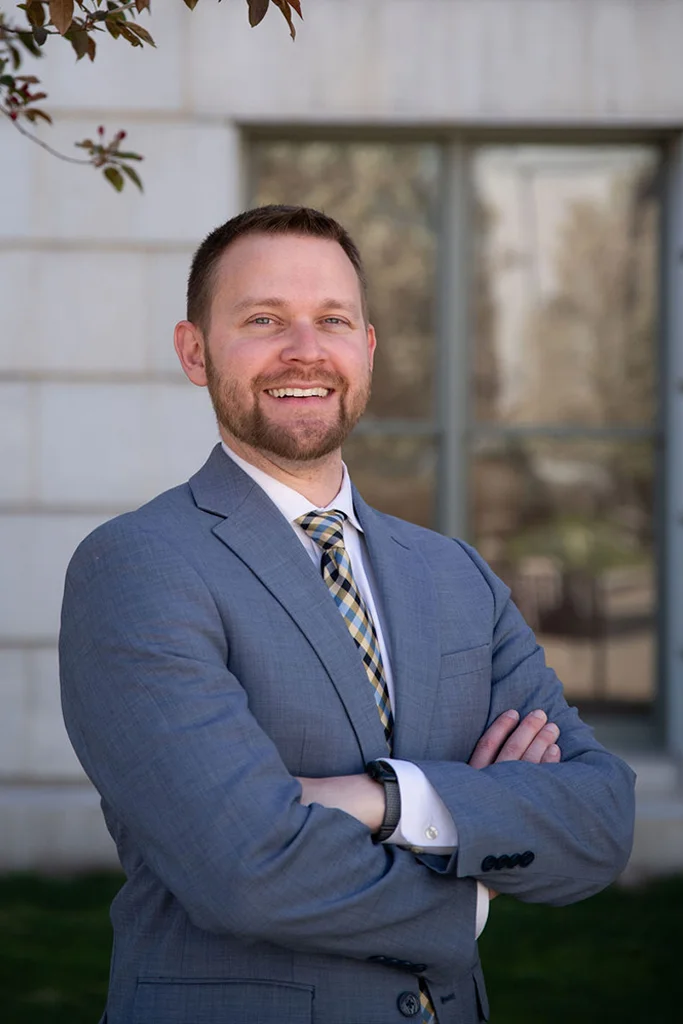
Fort Morgan DUI Defense Lawyer
Morgan County operates under the same Colorado DUI statutes as Denver or Jefferson County, but the local enforcement patterns, the courthouse dynamics, and the prosecutors handling these cases are distinctly different from what you would find along the Front Range. A driver stopped on Highway 34 or Interstate 76 near Fort Morgan faces a system that moves at its own pace and has its own tendencies. Reid DeChant, a Fort Morgan DUI defense lawyer with trial experience across Colorado, understands that defending a case effectively means understanding where that case is actually being heard.
How DUI Cases Get Built on Highway 34 and I-76
Eastern Colorado’s major corridors, particularly I-76 and the stretch of Highway 34 running through Fort Morgan, see consistent law enforcement presence. Commercial traffic, commuters, and travelers passing through the region mean troopers and county deputies are active on these roads throughout the day and into late evening. DUI stops in this part of the state frequently involve Colorado State Patrol rather than municipal officers, which affects how the stop was conducted, how the Express Consent advisement was delivered, and how evidence is documented.
These procedural details matter more than most drivers realize at the time of the stop. The sequence of events from the initial traffic contact through field sobriety testing and then chemical testing creates multiple points where the defense can challenge how law enforcement handled the encounter. A trooper who failed to properly administer field sobriety tests according to the NHTSA standardized protocol, or who did not correctly advise a driver under Colorado’s Express Consent law, may have compromised the admissibility of key evidence. Reid has obtained dismissals at the DMV level based on precisely these kinds of procedural deficiencies, including cases where the chemical test was not administered within the required two-hour window.
The DMV Hearing Is Separate From Your Criminal Case, and Both Have Deadlines
One of the most consequential misunderstandings in a DUI arrest is treating it as a single legal event. There are two parallel proceedings: the criminal case in Morgan County District Court, and the administrative action the Colorado DMV brings to revoke your driver’s license. These run on different tracks, are decided by different decision-makers, and require different preparation. Missing the DMV request deadline forfeits your right to a hearing entirely, which means an automatic license revocation that proceeds without any challenge.
The DMV Express Consent hearing is not a formality. It is a genuine legal proceeding where the hearing officer evaluates whether the stop was lawful, whether Express Consent was properly adviseed, and whether the chemical test was administered correctly. DeChant Law has a documented record of obtaining dismissals at these hearings based on improper advisements, flawed administration, and procedural failures by law enforcement. Winning the DMV hearing does not automatically resolve the criminal case, but preserving your license during the pendency of a criminal proceeding has real, practical consequences for your ability to work, travel, and manage daily responsibilities.
Blood Tests, Breath Tests, and What the Science Actually Allows
Colorado DUI prosecutions increasingly rely on blood tests rather than breath tests, in part because blood evidence is perceived as more scientifically reliable. That perception does not mean blood results are immune from challenge. The handling of a blood sample from draw to laboratory analysis involves a chain of custody, storage protocols, and testing procedures that must be followed correctly to produce a defensible result. Contamination, fermentation of the sample, or errors in the gas chromatography process can all affect the reported BAC number.
Breath testing carries its own set of vulnerabilities. The Intoxilyzer devices used in Colorado require calibration and maintenance on defined schedules, and the results can be affected by physiological factors including mouth alcohol, certain medical conditions, and the presence of compounds that the device cannot distinguish from ethyl alcohol. In a drug DUI case, which is common on Colorado’s eastern plains given both agricultural chemical exposure and prescription drug use, the prosecution faces the additional challenge of establishing actual impairment rather than mere presence of a substance in the bloodstream. THC metabolites, for example, can be detected long after any impairing effect has passed. Reid’s training and experience in challenging the scientific foundation of DUI evidence gives Morgan County clients a defense that goes beyond procedural argument.
What a Fort Morgan DUI Conviction Actually Costs You
The formal statutory penalties for a first DUI offense include five days to one year in jail, fines between $600 and $1,000, a nine-month license suspension, up to 96 hours of community service, and mandatory alcohol education classes. Those numbers reflect the floor, not the ceiling. Sentencing outcomes vary based on the BAC level, whether a minor was in the vehicle, whether there was an accident, and the judge handling the case.
The consequences that don’t appear in the statute are often the ones that reshape someone’s life most significantly. A DUI conviction creates a criminal record visible in background checks. For commercial drivers, even a first-offense DUI triggers federal consequences that can end a CDL career. For professionals licensed by the state, including nurses, physicians, and others holding regulated credentials, a conviction may require reporting to a licensing board and can trigger disciplinary proceedings independent of the criminal outcome. For non-citizens, a DUI conviction carries immigration consequences that range from complications in naturalization proceedings to removal in certain circumstances. None of these downstream effects are theoretical. They are the reason the criminal case itself requires serious preparation from the outset.
Answers to Questions Fort Morgan DUI Clients Ask
Does it matter that my arrest happened in a rural county rather than in Denver?
It does, in practical terms. Morgan County has a smaller caseload, which can affect negotiation dynamics, courtroom scheduling, and how familiar the prosecutor is with the specific facts of your stop. Knowing the local landscape matters when evaluating whether to push for a dismissal, negotiate a reduced charge, or take the case to trial.
What is a DWAI, and how does it differ from a DUI charge?
Driving While Ability Impaired is a separate charge triggered at a BAC between 0.05% and 0.079%, or when a driver shows impairment even below those levels. A DWAI carries lighter statutory penalties than a DUI, but it is still a criminal conviction with a record, license points, and potential professional consequences. Whether a reduction from DUI to DWAI is a meaningful outcome depends heavily on your specific circumstances.
Can I refuse the chemical test?
You can decline the test, but Colorado’s Express Consent law treats that refusal as a separate violation. Refusing triggers an automatic license revocation that is longer than the revocation for a failed test. The refusal can also be introduced as evidence in the criminal case. It is rarely the strategic choice it might appear to be.
What happens if this is a second or third DUI?
Repeat offenses carry mandatory jail time that begins to apply more aggressively, increased fines, longer license revocations, and the possibility of felony charges at the fourth offense. A prior DUI also changes the calculus on plea negotiations. The defense strategy for a repeat offense needs to account for the prior record while still identifying every legitimate challenge to the current charge.
My BAC was just over the legal limit. Does that mean I will be convicted?
No. The BAC reading is evidence, not a verdict. It can be challenged on its accuracy, the method used to obtain it, and the conditions under which it was administered. A result close to the legal limit may also open the door to a DWAI reduction, depending on other factors in the case.
What is the Trial Lawyers College, and why does it matter in a DUI case?
Trial Lawyers College is a training program focused on the art of storytelling and human connection in the courtroom. Reid has trained there. In a DUI case, that matters because jurors are not computers processing data. They respond to a complete picture of who you are, the circumstances of the stop, and the credibility of the officers and witnesses involved. A lawyer who can present that picture effectively has a different kind of impact than one who simply disputes numbers.
Do I have to go to court in Fort Morgan, or can my lawyer appear for me?
Many routine hearings in a Colorado criminal case can be handled by your attorney without requiring your presence. Whether you need to appear depends on the stage of the case and what is happening at each hearing. Reid handles cases across the Denver metro and surrounding counties, including Morgan County, and can discuss what your specific case requires.
Defending DUI Charges Across Morgan County and Eastern Colorado
DeChant Law represents clients in Fort Morgan, Brush, Wiggins, and throughout Morgan County. Reid also handles DUI cases in surrounding Eastern Colorado counties where drivers are often stopped along I-76, I-70, and the rural highways connecting these communities to the Front Range. The distance from Denver does not change the quality of representation a driver deserves, and it does not change how seriously Reid approaches each case. Whether the case is resolved at a DMV hearing, through negotiation, or at trial, the same preparation and attention goes into every file. If you have been charged with a DUI in or around Fort Morgan, a Colorado DUI defense attorney who has handled these cases from the stop through the verdict is the right place to start.